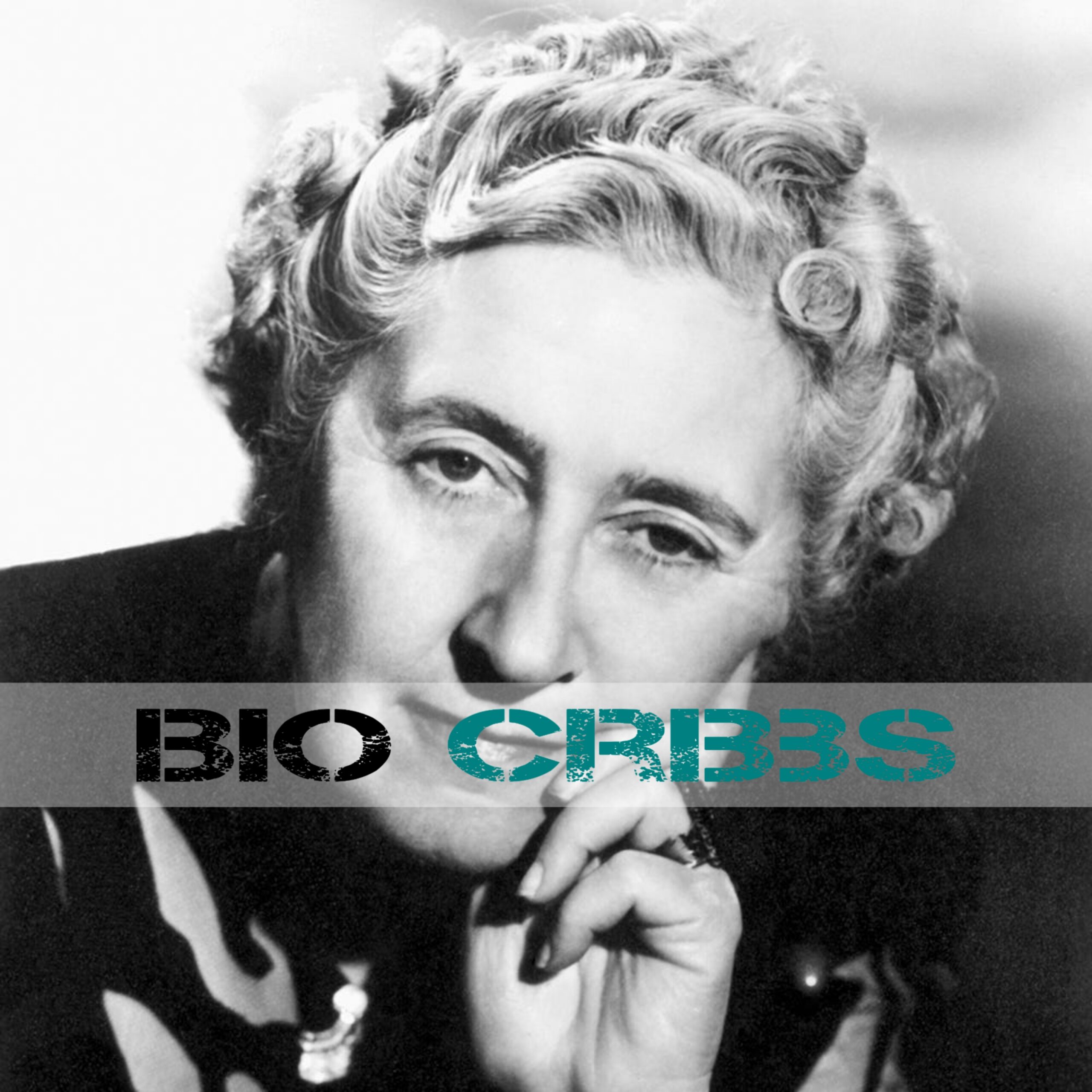
Agatha Christie was a famous British writer known for her detective novels and plays. She was born on September 15, 1890, in Torquay, Devon, England. She died on January 12, 1976, at the age of 85.
Also Read: Senzo Meyiwa Biography: The Complete Account, Verified Records & Legacy
Agatha grew up in a middle-class family. She was home-schooled and learned to read at an early age. She enjoyed writing poems and short stories as a child. Her love for mystery and storytelling grew stronger over time.
During World War I, she worked as a nurse and later as a pharmacy assistant. This experience helped her understand poisons, which she used in many of her stories. In 1914, she married Archibald Christie. They had one daughter, Rosalind. The marriage ended in divorce in 1928. Two years later, she married archaeologist Max Mallowan.
Agatha published her first novel, The Mysterious Affair at Styles, in 1920. It introduced Hercule Poirot, a Belgian detective who became one of her most famous characters. Later, she created Miss Marple, an elderly woman who solved crimes in her village. These characters appeared in many books and became icons of mystery fiction.
She wrote 66 detective novels, 14 short story collections, and over 20 plays. Her play The Mousetrap holds the record as the longest-running play in history. Her books have sold more than two billion copies worldwide. Some of her most popular works include Murder on the Orient Express, Death on the Nile, and And Then There Were None.
Agatha also wrote romance novels under the name Mary Westmacott. She kept this pen name secret for many years. Her writing style was simple, clever, and full of suspense. She used clues and twists to keep readers guessing.
In 1926, she disappeared for 11 days. The event caused a media frenzy. She was later found in a hotel, using a different name. She never spoke publicly about what happened.
Agatha received many honors during her life. In 1971, she was made a Dame Commander of the Order of the British Empire. She spent her later years in Wallingford, Oxfordshire, where she continued to write.
Her legacy lives on. Her stories are still read, adapted into films and TV shows, and loved by fans around the world. She is remembered as the Queen of Mystery and one of the greatest writers of all time.
Agatha Christie Early Life and Background
Agatha Christie was born Agatha Mary Clarissa Miller on September 15, 1890, in Torquay, Devon, England. She came from a relatively affluent, upper-middle-class family. Her mother, Clarissa, was a captivating storyteller who believed that formal schooling stifled creativity. Consequently, Agatha received a unique education: she was mostly home-schooled. Her father, Frederick Alvah Miller, was an American stockbroker who instilled in her a love of literature and mathematics. She learned to read and write very early, teaching herself to read by the age of five. Her early literary interests were nurtured in the expansive home library, filled with works by classic authors and children’s adventure stories. This childhood was idyllic and formative, emphasizing imagination over rote learning. It taught her the value of careful observation and the structure of a good tale. The sheltered yet stimulating environment of her youth ultimately provided her with the detailed knowledge of English society, its traditions, and its psychological undercurrents that she would later dissect so meticulously in her detective novels, a key characteristic of the Golden Age of Detective Fiction.
Also Read: Naledi Aphiwe Biography: The Complete Account, Verified Records & Legacy
Agatha Christie Personal Life
Agatha Christie’s personal life was as eventful and intricate as one of her best plots. She first married Archibald “Archie” Christie in 1914, shortly before the start of World War I. During the war, she worked as a volunteer nurse and later as a dispenser in a pharmacy, gaining invaluable knowledge of poisons that became a signature element in her crime fiction. The couple had one child, a daughter named Rosalind Hicks. The marriage ultimately ended in divorce in 1928 after Archie confessed his love for another woman. This period of personal upheaval led to her famous 1926 disappearance that captured global attention. She vanished for eleven days, sparking a massive search involving thousands of police officers. When she was finally found in a Harrogate hotel, claiming amnesia, the event became a major media coverage sensation, generating theories that persist today. She later found lasting happiness with her second husband, Max Mallowan, an archaeologist whom she married in 1930. Their marriage led to annual trips to the Middle East, which provided the exotic settings for some of her most celebrated mysteries.
Agatha Christie Writing Career and Style
Agatha Christie’s prolific writing career officially began with the publication of her debut novel, The Mysterious Affair at Styles, in 1920. This book, which introduced the iconic detective Hercule Poirot, was a direct result of a challenge from her sister to write a detective story. She quickly mastered the conventions of the Golden Age of Detective Fiction, but her genius lay in her development of signature style. Her works are renowned for their intricate plotting, ingenious plot twists, and liberal deployment of clever red herrings. She expertly used misdirection to keep the reader guessing until the final pages. More than just puzzles, her books possessed surprising psychological depth, exploring the motivations and dark secrets of the English middle and upper classes. While she is best known as the Queen of Mystery, she also used the pen name Mary Westmacott to publish six romance and dramatic novels between 1930 and 1956. This separate body of work allowed her to explore themes of love, grief, and family dynamics outside the strict confines of crime fiction.
Agatha Christie Iconic Characters and Series
The enduring appeal of Agatha Christie’s work rests largely on her unforgettable cast of iconic characters and series. Her most famous creation is Hercule Poirot, the meticulous, slightly vain, Belgian detective known for his waxed mustache and reliance on “the little grey cells.” Poirot appeared in 33 novels and more than 50 short stories, solving cases with a flourish and unparalleled deductive logic. Her other beloved sleuth is Miss Jane Marple, an unassuming, elderly sleuth from the fictional village of St. Mary Mead. Miss Marple, who appears in 12 novels, relies on her profound knowledge of human nature and village life to solve seemingly baffling crimes, comparing suspects to people she knows from her own quiet neighborhood. Beyond these two giants, Christie populated her work with other recurring characters like Tommy and Tuppence Beresford, and Superintendent Battle, as well as several brilliant standalone stories like And Then There Were None. Her ability to create diverse, compelling protagonists who embodied different facets of the British national character ensured her continued dominance as a British mystery novelist.
Agatha Christie Major Works and Achievements
Agatha Christie’s career is defined by monumental major works and achievements that secured her place as a global literary phenomenon. She penned over 66 detective novels and 14 short story collections. Among her bestsellers are classics frequently adapted for screen and stage, including Murder on the Orient Express, Death on the Nile, and the dark, suspenseful masterpiece, And Then There Were None. Her influence extended far beyond the printed page: her play, The Mousetrap, opened in 1952 and holds the record as the longest-running play in history, a testament to her enduring skill in crafting dramatic puzzles. Statistically, her records are unmatched; she has over 2 billion books sold worldwide, placing her behind only the Bible and William Shakespeare as the most-published author of all time. In recognition of her unparalleled literary contributions and service to British culture, she was appointed Dame Commander of the Order of the British Empire (DBE) in 1971.
Agatha Christie Adaptations and Media Influence
The timeless quality of Agatha Christie’s plots has led to countless adaptations and media influence across every major entertainment platform. Her novels have been translated into over 100 languages, giving her immense international reach. From the 1930s onward, her stories were adapted into successful film and TV adaptations. The various film versions of Murder on the Orient Express and the long-running television series featuring David Suchet as Poirot and various actresses as Miss Marple introduced her work to new generations globally. Her intricate plotting and closed-circle narratives established an essential framework that continues to influence modern crime fiction and shape pop culture tropes. Screenwriters and novelists still draw heavily on her use of the unreliable narrator and the sudden, shocking reveal. Her stories consistently prove to be highly adaptable, ensuring that her narrative techniques continue to form the backbone of the entire mystery genre worldwide.
Agatha Christie Death and Legacy
Agatha Christie’s extraordinary life concluded on January 12, 1976, when she died peacefully at her home in Wallingford, Oxfordshire, at the age of 85. She had achieved unparalleled global success and left behind a legacy that is both literary and cultural. She was buried in the churchyard of the Church of St Mary, Cholsey, Oxfordshire, near her home. Her continued popularity and relevance are sustained by the fact that her stories remain fresh, engaging, and culturally resonant. She founded Agatha Christie Limited, which continues to manage the rights to her immense catalog, ensuring her estate maintains careful control over new adaptations. The official website and global sales figures confirm her status as the bestselling novelist of all time. Her work not only defines the Golden Age of Detective Fiction but provides a permanent blueprint for the creation of intricate, puzzle-driven mysteries that continue to be discovered and devoured by readers worldwide.
Agatha Christie Age (The Verified Birth Year and Lifetime)
Agatha Christie Age was 85 years old at the time of her death. She was born on September 15, 1890.
Agatha Christie Husband (Archibald Christie and Max Mallowan: Two Marriages)
Agatha Christie husband was Archibald Christie, whom she married in 1914. Their marriage ended in divorce in 1928. She later married Max Mallowan, a British archaeologist, in 1930.
Also Read: Fannie Masemola Biography: The Complete Account, Verified Records & Legacy
Agatha Christie Daughter (Rosalind Hicks and Only Child)
Agatha Christie daughter is Rosalind Hicks. She was born in 1919 and remained closely involved in preserving her mother’s literary legacy.
Agatha Christie Profile Table (Quick Facts and Data Overview)
| Profile | Information |
| Agatha Christie career | Dame Commander of the Order of the British Empire (DBE); Best-selling fiction novelist and playwright of all time; Creator of Hercule Poirot and Miss Marple. |
| Agatha Christie real name | Dame Agatha Mary Clarissa Christie, Lady Mallowan (née Miller) |
| Agatha Christie age | 85 years (at time of death) |
| Agatha Christie date of birth | September 15, 1890 |
| Agatha Christie net worth | Not known (Her works sold over 2 billion copies, generating a considerable fortune; precise net worth is a private historical figure). |
| Agatha Christie wife / spouse | 1) Archibald Christie (m. 1914; div. 1928). 2) Sir Max Mallowan (m. 1930). |
| Agatha Christie children | One daughter: Rosalind Hicks (born 1919). |
| Agatha Christie parents | Frederick Alvah Miller (Father, American stockbroker); Clarissa “Clara” Miller (Mother). |
| Agatha Christie religion | Not known (Buried in St Mary’s Churchyard, Cholsey, Oxfordshire). |
| Agatha Christie state of origin | Not applicable (Born in Torquay, Devon, England). |
| Agatha Christie alma mater | Not applicable (Largely home-schooled; later attended finishing schools in Paris). |
| Agatha Christie education | Home-schooled; studied music/finishing school in Paris; worked as a VAD nurse and dispensary assistant during WWI. |
| Agatha Christie nationality | British |
Leave a Reply