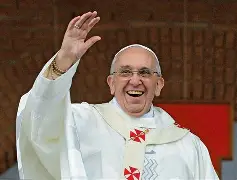
Full Name: Jorge Mario Bergoglio Papal Name: Pope Francis Date of Birth: December 17, 1936 Date of Death: April 21, 2025 (Easter Monday) Age at Death: 88 years old Place of Birth: Buenos Aires, Argentina Nationality: Argentine Occupation: Head of the Catholic Church, Sovereign of Vatican City (2013–2025) Successor: Pope Leo XIV (Cardinal Robert Francis Prevost, elected May 8, 2025)
Pope Francis was one of the most consequential religious leaders of the 21st century — a man who sought to transform the Catholic Church from within, championing the poor, the marginalised, and the planet with a warmth and directness that won him admirers far beyond the boundaries of his faith. On April 21, 2025 — Easter Monday — he passed away at the age of 88, leaving behind a legacy that will shape the Catholic Church and the world for generations.
Here is the full story of Pope Francis: where he came from, what he stood for, how he died, and what happens now for the world’s 1.4 billion Catholics.
Early Life and Family Background
Pope Francis was born Jorge Mario Bergoglio on December 17, 1936, in Buenos Aires, Argentina, the eldest of five children. His parents, Mario José Bergoglio and Regina María Sívori, were Italian immigrants — his father was a railway worker who had emigrated from Piedmont, Italy. This immigrant heritage would deeply shape Francis’s lifelong advocacy for refugees and migrants.
Growing up in a working-class neighbourhood of Buenos Aires, Jorge was a bright, sociable young man with a passion for football (he was a supporter of San Lorenzo football club), dancing the tango, and literature. He worked as a bouncer, a janitor, and a chemical laboratory technician before his calling to the Church took hold.
The turning point came in 1958, when, recovering from a severe illness that cost him part of his lung tissue (a health reality that would shadow him in his final years), he felt called to enter the Society of Jesus — the Jesuits — one of the Catholic Church’s most rigorous intellectual and missionary orders.
He was ordained a Catholic priest in 1969, having completed years of study in philosophy and theology. From 1973 to 1979, he served as the Jesuit Provincial Superior in Argentina — the head of the Jesuits in his country — during one of Argentina’s most turbulent political periods, the military dictatorship known as the “Dirty War.” His conduct during this period has been both praised and scrutinised by historians.
Rise Through the Church
In 1992, Bergoglio was appointed Auxiliary Bishop of Buenos Aires. In 1998, he became Archbishop of Buenos Aires — the most senior Catholic position in Argentina. Three years later, in 2001, Pope John Paul II elevated him to Cardinal.
As Cardinal Archbishop, Bergoglio became widely known for:
- Living in a small apartment rather than the Archbishop’s palace
- Cooking his own meals
- Riding public buses and the Buenos Aires subway instead of using a chauffeured car
- Washing the feet of HIV-positive patients and prisoners
He was already considered a papabile (papal candidate) in the 2005 conclave that elected Pope Benedict XVI. Eight years later, when Benedict XVI made the extraordinary decision to resign — only the second pope in history to do so — Bergoglio’s moment came.
Becoming Pope Francis (2013)
On March 13, 2013, Cardinal Jorge Bergoglio was elected Pope by the College of Cardinals on the fifth ballot of the conclave. He was 76 years old.
When he appeared on the balcony of St. Peter’s Basilica for the first time as pope, he bowed his head and asked the crowd to pray for him before he gave his blessing — a humble reversal of tradition that immediately signalled to the world that this pope would be different.
He chose the name Francis — in honour of Saint Francis of Assisi, the 13th-century Italian friar renowned for his poverty, humility, and care for the natural world. It was the first time any pope had taken this name.
Pope Francis was the first in multiple historic categories:
- The first Jesuit pope
- The first pope from Latin America
- The first pope born outside Europe since Syrian Pope Gregory III in the 8th century
His Papacy: 12 Years of Transformation (2013–2025)
A New Style of Leadership
From day one, Francis broke with papal tradition. He declined to live in the grand Apostolic Palace, choosing instead the modest Domus Sanctae Marthae, a Vatican guesthouse where he ate in the communal canteen with staff. He refused ornate papal garments, wore simple white robes, and carried his own briefcase.
He regularly stopped his motorcade to embrace disabled or sick pilgrims. He washed the feet of prisoners, refugees, and women during Holy Thursday Masses. He called himself a “sinner” who had been chosen by God through the mercy of the Church.
Key Causes and Positions
Climate Change: In 2015, Pope Francis released Laudato Si’, a landmark environmental encyclical urging urgent global action on climate change, calling it a moral and spiritual crisis. It influenced climate negotiations worldwide and remains one of the most significant papal documents in modern history.
The Poor and Marginalised: Francis repeatedly criticised economic inequality and the “throwaway culture” of modern capitalism. He argued that the global economic system too often discarded the vulnerable — and challenged wealthy nations to do more.
Migrants and Refugees: He visited refugee camps in Greece and Lesbos, personally brought refugee families back to the Vatican, and repeatedly called the protection of migrants a “duty of civilisation.” His very first papal trip outside Rome was to the island of Lampedusa, a gateway for African migrants crossing the Mediterranean.
LGBTQ+ Issues: While maintaining Catholic doctrine on same-sex marriage, Francis took a notably more pastoral tone than his predecessors. In 2023, he authorised priests to bless same-sex couples — a move that sparked significant debate within the Church but was welcomed by many as a step toward inclusion.
Peace Diplomacy: He helped broker the historic restoration of diplomatic relations between Cuba and the United States in 2015. He negotiated a deal with China over the appointment of Chinese Catholic bishops. He sent peace missions to Ukraine during the Russian invasion. He consistently condemned war and called for dialogue.
Child Abuse Crisis: The sexual abuse scandal that had engulfed the Church before his papacy continued during his tenure. He took significant steps to overhaul Vatican procedures for handling abuse cases, met with survivors, and issued formal apologies on behalf of the Church — including for the Canadian Indian residential school system in 2022. Critics argued these steps did not go far enough; supporters said he did more than any predecessor.
Final Years and Death
In his final years, Pope Francis’s health visibly declined. He had used a wheelchair since 2022 due to persistent knee problems. In early 2025, he was hospitalised at Rome’s Gemelli Hospital after what initially appeared to be a routine case of bronchitis — but was later revealed to be a serious polymicrobial infection and bilateral pneumonia, requiring blood transfusions and high-flow oxygen.
He was discharged in March 2025, frail but determined, appearing before crowds outside the hospital and delivering a blessing.
He made his last public appearance on Easter Sunday, April 20, 2025, meeting with US Vice President JD Vance at the Vatican and appearing before the faithful in St. Peter’s Square.
The following morning — Easter Monday, April 21, 2025 — at 7:35 AM Rome time, Pope Francis died at Domus Sanctae Marthae. Cardinal Kevin Farrell, the Camerlengo, announced his death to the world just after 9:45 AM.
The official cause of death was a cerebral stroke followed by cardiovascular collapse. He was 88 years old.
Over 250,000 people attended his funeral on April 26. More than 500,000 paid their respects as he lay in state in St. Peter’s Basilica. He was buried at the Basilica of Santa Maria Maggiore in Rome — the first pope to be buried outside the Vatican in over a century — in accordance with his expressed wishes and his deep devotion to Our Lady.
His Successor: Pope Leo XIV
On May 7–8, 2025, 133 of the 135 eligible Cardinals gathered in the Sistine Chapel for the conclave to elect a new pope. After just four rounds of voting, they elected Cardinal Robert Francis Prevost, the American-born prefect of the Dicastery for Bishops, who took the name Pope Leo XIV.
Leo XIV made history as the first pope born in the United States. He is also of Peruvian heritage through his work as Bishop of Chiclayo, making him a bridge between the Americas just as Francis had been.
In his early papacy, Leo XIV has emphasised continuity with Francis — embracing his environmental legacy, his concern for migrants, and his financial reforms — while adopting a somewhat more reserved personal style. He has firmly maintained traditional Catholic teaching on abortion, same-sex marriage, and the ordination of women.
Pope Francis’s tomb at Santa Maria Maggiore has already become a major site of pilgrimage, drawing a continuous flow of visitors from around the world.
Quick Facts
| Detail | Information |
|---|---|
| Full Name | Jorge Mario Bergoglio |
| Papal Name | Pope Francis |
| Born | December 17, 1936, Buenos Aires, Argentina |
| Died | April 21, 2025, Vatican City |
| Age at Death | 88 years old |
| Papacy | March 13, 2013 – April 21, 2025 (12 years) |
| Order | Society of Jesus (Jesuits) |
| Historic Firsts | First Jesuit pope, first Latin American pope, first from outside Europe since 8th century |
| Buried | Basilica of Santa Maria Maggiore, Rome |
| Successor | Pope Leo XIV (Robert Francis Prevost) |
| Notable Document | Laudato Si’ (2015) — encyclical on climate change |
Conclusion
Pope Francis was a man who dared to challenge the world’s most powerful institution — the Catholic Church itself — from within. He championed the forgotten, the displaced, and the broken. He spoke of mercy when others spoke of judgment. He chose simplicity when his position demanded grandeur.
His death on Easter Monday 2025 drew mourning from across the religious and political spectrum — from heads of state to the poorest pilgrims who waited hours to pass by his coffin. Whether or not one agreed with every position he took, the world knew it had witnessed something rare: a leader who genuinely meant what he said.
His legacy lives on in the 1.4 billion Catholics he shepherded — and in the new pope who continues the work he began.
Published by Bio Cribbs | April 2026 Tags: Pope Francis biography, Pope Francis death 2025, Pope Francis legacy, Pope Leo XIV, Pope Francis successor, Jorge Mario Bergoglio, Catholic Church 2025
Leave a Reply