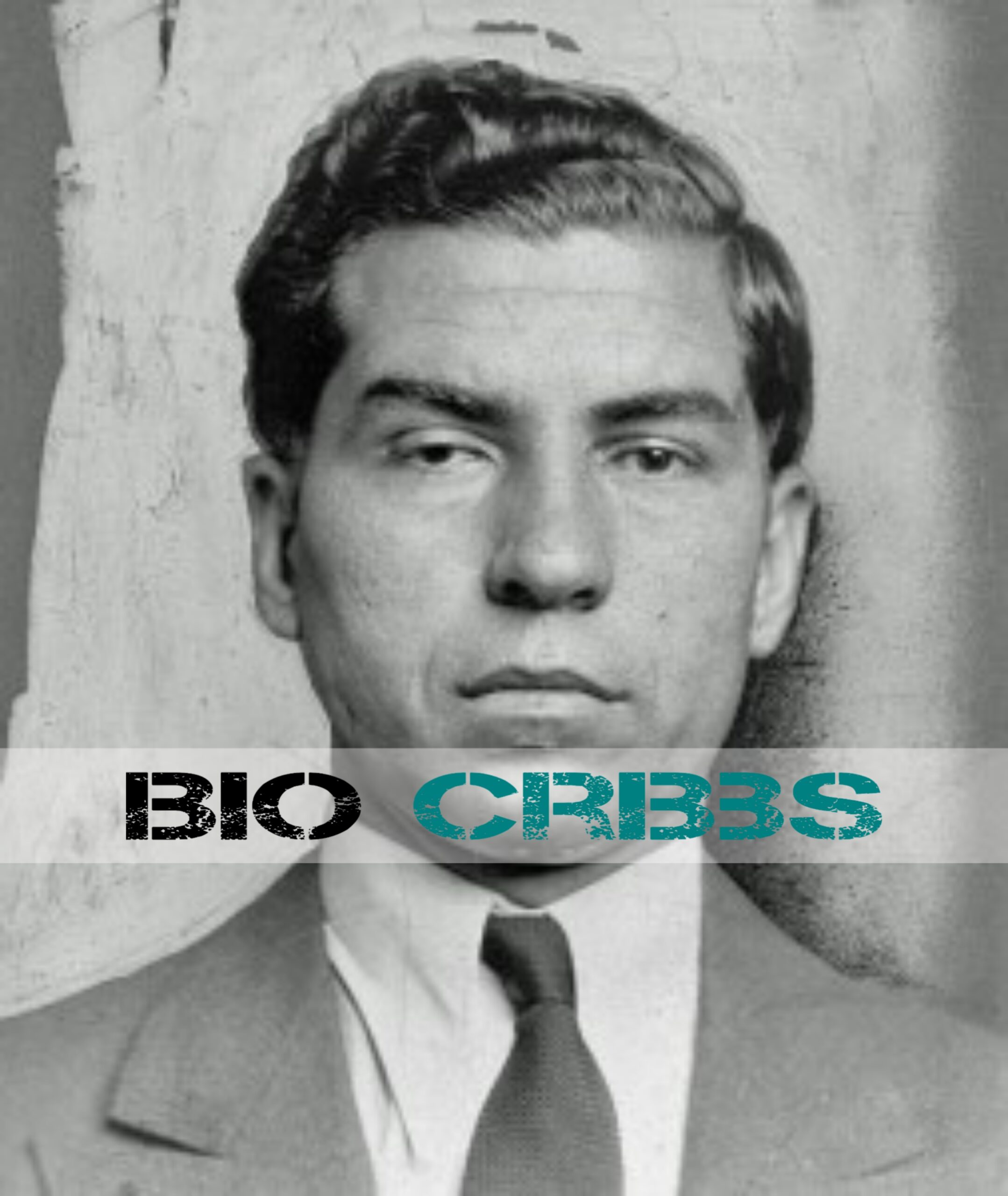
Lucky Luciano was born as Salvatore Lucania on November 24, 1897, in Lercara Friddi, Sicily, Italy. He moved to New York City with his family in 1906 when he was nine years old. They settled in the Lower East Side, a tough neighborhood where crime was common. Luciano dropped out of school early and began working small jobs. Soon, he joined local gangs and started building connections in the criminal world.
Also Read: Marie Antoinette Biography: The Complete Account, Verified Records & Legacy
In his teens, Luciano became part of the Five Points Gang. He met other future crime leaders like Meyer Lansky and Bugsy Siegel. During Prohibition, he made money by smuggling alcohol. This helped him rise quickly in the underworld. He worked with big names like Arnold Rothstein and became known for his smart and ruthless style.
By the early 1930s, Luciano played a key role in the Castellammarese War, a violent power struggle between Mafia families. He helped eliminate rivals like Joe Masseria and Salvatore Maranzano. After the war, he reorganized the Mafia. He created The Commission, a group that allowed crime families to work together and avoid fights. This move changed organized crime in America.
Luciano became the boss of the Genovese crime family. He ran operations in New York and had influence across the country. His group dealt in gambling, drugs, and extortion. He was known for running the Mafia like a business. This earned him respect and fear.
In 1936, police arrested Luciano for running a prostitution ring. He was found guilty and sentenced to 30 to 50 years in prison. Even in jail, he stayed active in crime. During World War II, U.S. officials asked for his help to protect the New York docks from enemy threats. In return, his sentence was reduced.
In 1946, Luciano was released from prison but deported to Italy. He settled in Naples and continued his criminal work. He stayed involved in drug trafficking and kept in touch with American mobsters. Though far from New York, he remained a powerful figure.
Lucky Luciano died of a heart attack on January 26, 1962, at Naples Airport. He was 64 years old. His body was returned to New York and buried in St. John Cemetery in Queens.
Luciano’s life left a deep mark on organized crime. He built a system that lasted for decades. His leadership, planning, and bold moves made him one of the most important Mafia figures in history.
Lucky Luciano Early Life and Immigration
Lucky Luciano was born Salvatore Lucania on November 24, 1897, in Lercara Friddi, Sicily. This small Sicilian town was also the birthplace of other future crime figures, linking Luciano to the island’s notorious history with the Mafia from his earliest days. His family, like many at the turn of the century, sought a better life. In 1906, at the age of nine, Luciano immigrated to New York City with his parents. They settled in the notoriously rough Lower East Side of Manhattan, a densely populated area that was a crucible for various ethnic street gangs. Luciano’s childhood was dominated by poverty and the street environment. He quickly shed his Italian name, adopting the anglicized “Charles Luciano.” He began his criminal career early, not by violence, but by running protection rackets against Jewish boys for nickels and dimes. This early hustling quickly led him to form a crucial and lasting partnership with a young Jewish gangster named Meyer Lansky. This non-Italian alliance was highly unusual at the time, showing Luciano’s pragmatic approach to business over outdated ethnic loyalty. His youth in the Lower East Side immersed him in the melting pot of crime, setting the stage for his revolutionary changes to the American underworld.
Lucky Luciano Entry into Organized Crime
Luciano’s street smarts and ruthless efficiency quickly elevated his status in the underworld. He made his initial mark by joining the infamous Five Points Gang, a diverse criminal organization based in Manhattan that was active during the late 19th and early 20th centuries. This early association was key to establishing his future network, leading to pivotal alliances that transcended traditional Sicilian-American crime. His friendship with Meyer Lansky proved invaluable, forming the core of what would become the sophisticated organized crime structure. Another key early connection was with Bugsy Siegel, who became one of Luciano’s most reliable enforcers and partners. The real opportunity for massive wealth came with the onset of Prohibition in 1920. Luciano quickly shifted his operations to bootlegging, managing the complicated network of smuggling, distributing, and selling illegal alcohol. This vast, new enterprise taught him the corporate logistics necessary to run a nationwide criminal network. His successful expansion during this era made him indispensable to the “Mustache Pete” bosses, even as he privately scorned their rigid, old-world methods.
Lucky Luciano Rise to Power
Luciano orchestrated a violent but necessary revolution in American organized crime, culminating in his dramatic rise to power. This entire period centered around the bloody Castellammarese War that raged from 1930 to 1931. This war pitted the old-world traditionalists, led by Joe Masseria and Salvatore Maranzano, against the younger, more pragmatic Americanized faction. Luciano was initially a loyal lieutenant to Masseria, but he realized the archaic structure was holding back their vast criminal potential. In a decisive move, Luciano betrayed Joe Masseria, setting him up to be assassinated in a Brooklyn restaurant in April 1931. Shortly after, Luciano consolidated power by having his closest rival, the self-proclaimed capo di tutti capi Salvatore Maranzano, eliminated. This double elimination ended the Sicilian power struggle and cleared the path for Luciano to implement his vision of a modern, efficient criminal enterprise. This purge, a necessary bloodletting, allowed the National Crime Syndicate to be born, an organization that was designed for profit, not personal vendettas.
Also Read: Horace Mann Biography: The Complete Account, Verified Records & Legacy
Lucky Luciano Leadership and Influence
Following the Castellammarese War, Luciano established a new structure for organized crime that defined the American Mafia for decades. His most significant achievement was the creation of The Commission, a ruling body modeled after corporate boards rather than feudal monarchies. The Commission served as a council that regulated disputes, approved major moves, and—critically—prevented all-out internal gang wars. This structure forced cooperation among the traditionally warring Italian-American crime families. Luciano became the head of what is now known as the Genovese crime family, but his influence extended far beyond this single group. He unified Italian-American crime families under a pragmatic, profit-oriented structure that included non-Italian partners like Meyer Lansky and Bugsy Siegel in the overarching National Crime Syndicate. His leadership promoted stability and massive economic growth, shifting the Mafia’s focus from mere street violence to control over legitimate and illicit industries like gambling, labor rackets, and drug trafficking. Luciano’s system ensured crime in America was run as a disciplined, nationwide business venture.
Lucky Luciano Legal Troubles and Conviction
Despite his sophisticated control over the underworld, Lucky Luciano eventually fell victim to a focused legal campaign led by special prosecutor Thomas E. Dewey. In 1936, Luciano was arrested for compulsory prostitution, a charge resulting from an aggressive crackdown on vice rackets in New York City. The charges were morally charged and difficult for the powerful gangster to fight. The prosecution relied heavily on testimony from a series of coerced witnesses and prostitutes. Following a high-profile trial that generated immense publicity, Luciano was convicted and sentenced to 30–50 years in state prison. He was sent to Dannemora, a maximum-security prison far upstate near the Canadian border. Even from this remote location, Luciano’s power was so pervasive that he continued to influence operations from behind bars. His underbosses and lieutenants visited him regularly for instructions, ensuring that the Genovese crime family and The Commission continued to function efficiently, a testament to the strength and structure of the National Crime Syndicate he had built.
Lucky Luciano World War II Deal and Deportation
A bizarre twist of fate during World War II offered Luciano a path out of prison. Following the sinking of a troop ship in the New York harbor, the U.S. government became gravely concerned about German U-boat activity and sabotage on the New York docks. Knowing that the mob controlled the waterfront unions, the U.S. Navy allegedly reached out to Luciano, through Meyer Lansky, for assistance. In a secret, controversial agreement, Luciano allegedly helped U.S. Navy secure New York docks by providing his vast intelligence network and ensuring worker cooperation and vigilance against espionage. After the war, this “cooperation” was used as justification for his early release. In 1946, New York Governor Thomas E. Dewey (the same prosecutor who convicted him) commuted his sentence on the condition that Luciano be immediately deported to Italy. Despite trying to re-enter the U.S. through Cuba, he was eventually forced to settle in Naples, Italy, ending his reign over American soil.
Lucky Luciano Later Life and Death
Following his forced deportation to Italy in 1946, Lucky Luciano settled in Naples. Despite the terms of his release and deportation, he immediately sought ways to maintain his immense power and wealth. U.S. authorities and the Federal Bureau of Narcotics constantly monitored his activities, suspecting him of continuing his criminal enterprise. It is widely believed that he used his base in Naples, Italy, to become deeply involved in international drug trafficking, pioneering the heroin trade routes from the Middle East and Sicily to the United States. He frequently met with American mobsters who traveled abroad. Luciano died suddenly of a heart attack on January 26, 1962, at the Naples International Airport. He was there to meet with an American film producer about a movie based on his life. His death occurred in public view, ensuring his final moments were as dramatic as his life. Remarkably, due to a deal arranged before his death, his body was allowed to be returned to the U.S. He was buried in St. John Cemetery, Queens, New York, bringing the mastermind of the National Crime Syndicate back to the city he had once ruled.
Lucky Luciano Legacy and Cultural Impact
Lucky Luciano’s legacy and cultural impact are indisputable. He is universally seen as the father of modern organized crime in America. His structural innovation—the creation of The Commission and the National Crime Syndicate—transformed the chaotic underworld into a highly disciplined, multi-ethnic business enterprise focused on profit and stability. This model, which replaced the old “Mustache Pete” system, became the enduring template for the American Mafia. His dramatic life story, spanning from a Sicilian immigrant’s rise in the Five Points Gang to his deportation from America, has inspired countless books, films, and documentaries. His narrative embodies the darker side of the American dream. The final legacy of Salvatore Lucania is fiercely debated: was he merely a criminal mastermind, or was he a strategic reformer whose pragmatic genius modernized crime into a force that impacted labor, business, and politics for generations? His influence continues to resonate throughout popular culture and serious crime history.
Lucky Luciano Age (The Verified Birth Year and Lifetime)
Lucky Luciano Age was 64 years. He was born on November 24, 1897.
Lucky Luciano Wife and Relationship Status
Lucky Luciano never had a wife. He remained unmarried throughout his life, focusing instead on his criminal career and business dealings. Though he had relationships, none led to marriage.
Lucky Luciano Children (Family Details and Offspring)
Lucky Luciano Children: He had no children. Throughout his life, Lucky Luciano never married or had any known offspring. His focus remained on building and managing his criminal empire.
Also Read: Artemisia Gentileschi Biography: The Complete Account, Verified Records & Legacy
Lucky Luciano Net Worth (Estimated Wealth and Criminal Earnings)
Lucky Luciano Net Worth was estimated to be around $150 million at the time of his death.
Lucky Luciano Profile Table (Quick Facts and Data Overview)
| Profile | Information |
| Lucky Luciano career | Mobster; Founder of The Commission and the National Crime Syndicate; First boss of the modern Genovese crime family; Involved in bootlegging, prostitution, and drug trafficking. |
| Lucky Luciano real name | Salvatore Lucania (Adopted the name Charles Luciano) |
| Lucky Luciano age | 64 (Died January 26, 1962) |
| Lucky Luciano date of birth | November 24, 1897 |
| Lucky Luciano net worth | Not known (Personal annual income estimated at $4 million—around $10 million in today’s dollars—during the 1920s; final legal estate worth was low, but actual wealth unknown) |
| Lucky Luciano wife / spouse | None (Was married to Igea Lissoni in 1949 according to some reports, but never legally confirmed; had numerous mistresses) |
| Lucky Luciano children | Not known (He claimed no children) |
| Lucky Luciano parents | Father: Antonio Lucania; Mother: Rosalia Capporelli |
| Lucky Luciano religion | Roman Catholicism (Born into a Catholic family) |
| Lucky Luciano state of origin | Sicily, Italy (Immigrated to New York City) |
| Lucky Luciano alma mater | Not known (Dropped out of school at a young age) |
| Lucky Luciano education | Limited formal schooling; largely self-educated in street gangs and business of crime. |
| Lucky Luciano nationality | Italian (by birth); Deported from the U.S. in 1946. |
Leave a Reply