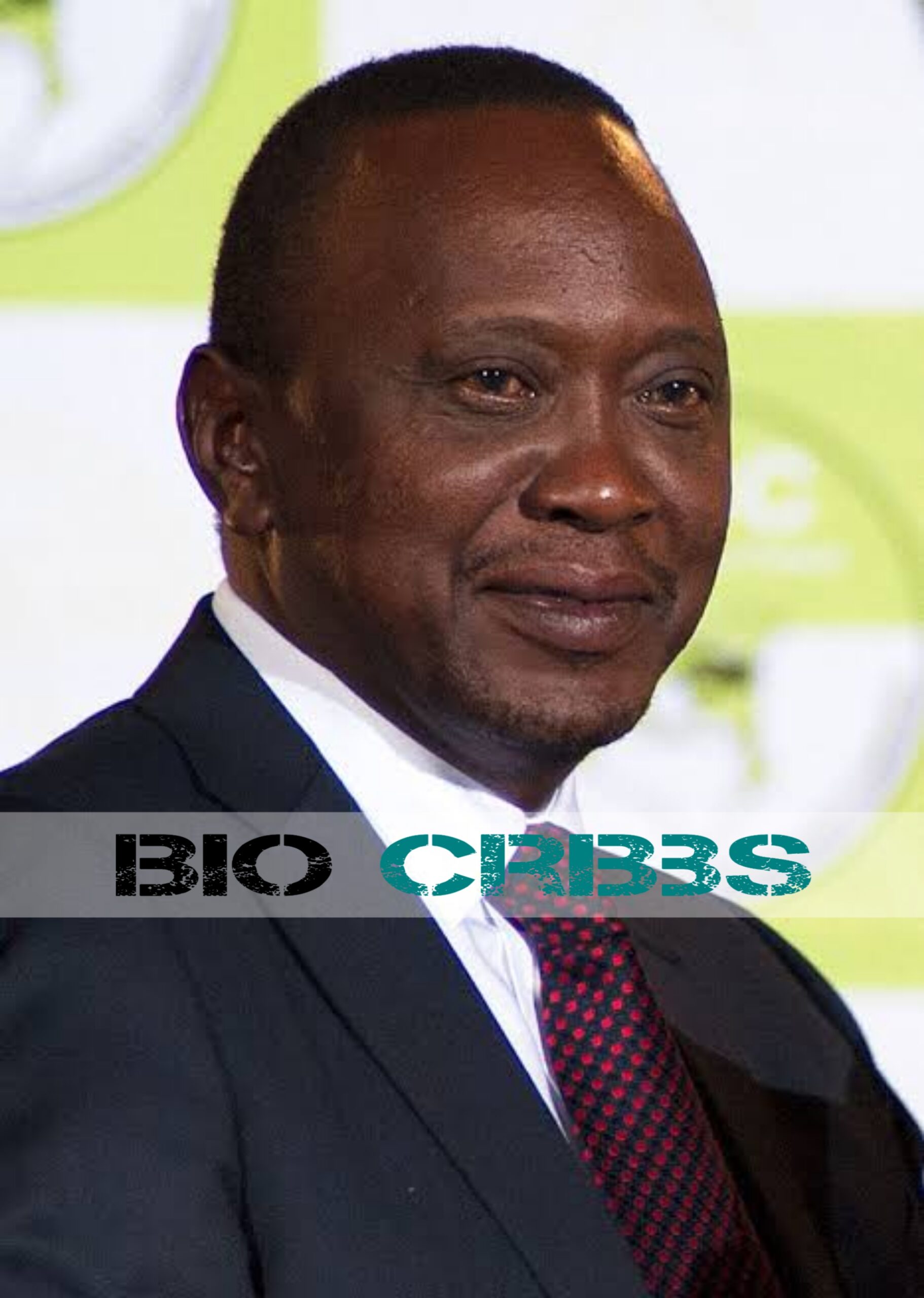
Uhuru Kenyatta is a Kenyan politician and businessman. He was born on October 26, 1961, in Nairobi, Kenya. He is 63 years old as of 2025.
Also Read: Samia Suluhu Hassan Biography: The Complete Account, Verified Records & Legacy
Uhuru is the son of Jomo Kenyatta, Kenya’s first president, and Mama Ngina Kenyatta. He grew up in a prominent family with deep roots in Kenya’s history. His early education took place at St. Mary’s School in Nairobi. Later, he moved to the United States and studied Political Science and Economics at Amherst College in Massachusetts. He graduated in 1985.
After college, Uhuru returned to Kenya and started working in business. He founded Wilham Kenya Limited, a company that exported agricultural products. His interest in politics grew over time. In 2001, President Daniel arap Moi nominated him to Parliament. Soon after, he became Minister for Local Government.
Uhuru’s political career advanced quickly. He served as Minister of Trade, Finance, and Deputy Prime Minister under President Mwai Kibaki. In 2013, he was elected as Kenya’s fourth president. He was re-elected in 2017 and served until 2022.
During his presidency, Uhuru focused on infrastructure, health, manufacturing, and food security. These goals formed his Big Four Agenda. He also promoted digital services and built new roads and railways. His leadership helped modernize parts of Kenya’s economy.
Uhuru worked closely with other African leaders. He played a role in peace talks and regional cooperation. He also made efforts to unite Kenya’s political rivals. One major moment was his handshake with opposition leader Raila Odinga in 2018. This helped calm political tensions.
After leaving office, Uhuru continued to serve Africa. He became a peace envoy and worked on resolving conflicts in Ethiopia and the Democratic Republic of Congo. He also remained active in business and public service.
Uhuru is married to Margaret Kenyatta. She is known for her work in health and education. Together, they have children and live a private family life.
Throughout his career, Uhuru faced challenges. He was once charged by the International Criminal Court, but the case was dropped. His government also faced criticism over corruption and public debt. Still, many people credit him for improving infrastructure and promoting peace.
Uhuru Kenyatta’s life reflects leadership, service, and resilience. He helped shape Kenya’s future and continues to influence African politics.
Uhuru Kenyatta Early Life and Family Background
Uhuru Muigai Kenyatta was born on October 26, 1961, in Nairobi, Kenya, a nation whose history is intrinsically linked to his family name. He is the son of Jomo Kenyatta, Kenya’s founding president, and Ngina Kenyatta (née Muhoho), his fourth wife, ensuring that from birth, he was part of the nation’s pre-eminent Kenyatta family dynasty. His name, “Uhuru,” is the Swahili word for “freedom,” a term deliberately chosen in anticipation of Kenya’s imminent independence. He was raised in a wealthy and politically powerful Kikuyu family, a background that gave him access to elite social and educational circles but also made him subject to intense public scrutiny throughout his career. The family’s wealth, built over the post-independence era, included extensive land holdings and substantial interests in banking, media, and tourism. This vast wealth and the political power inherent in the Jomo Kenyatta legacy profoundly influenced his destiny. His early life was characterized by a comfortable existence sharply contrasted against the hardship experienced by many other Kenyans. This powerful Kenyatta family connection served as both a launchpad for his political career and a recurring source of criticism concerning inherited privilege in Kenya’s political history.
Uhuru Kenyatta Education and Early Career
Uhuru Kenyatta received a distinguished education that spanned continents. He attended the prestigious St. Mary’s School in Nairobi for his secondary education. Following his graduation in 1979, he briefly worked as a teller at the Kenya Commercial Bank, gaining some early exposure to the financial sector. He then traveled to the United States for higher learning. He enrolled at Amherst College, USA, a highly respected private liberal arts college in Massachusetts, graduating between 1981 and 1985 with a degree in Political Science and Economics. This formal education in governance and economic theory provided the intellectual framework for his future ministerial and presidential roles. Upon returning to Kenya, the Amherst College alumnus utilized his background to become a Kenyan entrepreneur. He started his own company, Wilham Kenya Limited, which specialized in sourcing and exporting agricultural produce. Beyond his own venture, he quickly assumed some responsibility for managing his Kenyatta family’s extensive business holdings, which solidified his reputation as a shrewd businessman long before he entered the complex field of Kenyan politics.
Uhuru Kenyatta Entry into Politics
Uhuru Kenyatta’s entry into politics was initially guided by patronage. After an unsuccessful bid for the Gatundu South parliamentary seat in 1997, his fortunes changed in 2001 when he was nominated to Parliament by then-President Daniel arap Moi. Moi, who led the long-ruling KANU party, appointed Kenyatta as Minister for Local Government shortly thereafter. The most significant turning point came in 2002 when Moi controversially selected the politically inexperienced Kenyatta as his preferred successor for the presidency. Kenyatta lost the subsequent election to Mwai Kibaki, after which he served as the official Leader of the Opposition. His influence remained, and in the post-2007 election turmoil that led to a coalition government, he again played a prominent role. In the new Grand Coalition Cabinet formed under President Mwai Kibaki, Kenyatta served in key Ministerial roles starting in 2008, initially as Minister of Local Government, then Trade, and finally Minister of Finance from 2009 to 2012. Throughout this period, he also served as Deputy Prime Minister, demonstrating his rapid ascent in the highest echelons of Kenyan Parliament and Kenyan politics.
Also Read: Raphael Tuju Biography: The Complete Account, Verified Records & Legacy
Uhuru Kenyatta Presidency (2013–2022)
Uhuru Kenyatta’s tenure as Kenya’s 4th President began when he was Elected President in 2013 and re-elected in 2017. His presidency was defined by ambitious economic and infrastructural goals and high-stakes political drama. His administration focused heavily on the Big Four Agenda, a flagship policy framework aimed at delivering food security, affordable housing, universal healthcare, and manufacturing growth by 2022. This agenda was seen as crucial to advancing Kenya Vision 2030 goals. Infrastructure development, particularly the Standard Gauge Railway (SGR), was a major focus, albeit one that attracted criticism regarding cost and public debt. A defining political event was the ICC charges against him and his Deputy, William Ruto, related to the 2007 post-election violence. The charges were later dropped, a massive political victory. His second term was dramatically reshaped by the unexpected Raila Odinga handshake in 2018, a political truce that ended a period of intense post-election hostility and shifted the political alliances within Kenyan politics for the rest of his term.
Uhuru Kenyatta Leadership Style and Legacy
Uhuru Kenyatta’s Leadership Style and Legacy are complex and often contradictory. His style blended inherited dynastic authority with a modern, populist touch, often seeking to project an image of national unity after turbulent election periods. A key focus of his tenure was economic growth and massive infrastructure development, which analysts credit with doubling the size of Kenya’s economy during his presidency. He was deeply engaged in regional diplomacy, serving as a facilitator in conflicts in Ethiopia and the Democratic Republic of Congo, raising Kenya’s profile in East African politics. This work earned him recognition as an East African leader. However, his Uhuru Kenyatta legacy is heavily mixed. While praised for stability and infrastructure, his administration faced persistent mixed reviews on corruption and governance, with critics pointing to ballooning public debt and the Pandora Papers listing regarding his family’s offshore wealth. His political realignment, culminating in the Raila Odinga handshake, ultimately fractured the unity within his own party but is widely seen as having delivered essential political stability to Kenyan politics.
Uhuru Kenyatta Personal Life
Uhuru Kenyatta’s Personal Life is rooted in his powerful Kenyatta family and his strong partnership with his wife, Margaret Kenyatta (née Gakuo). He married Margaret in 1991, and they have three children: two sons, Jomo Kenyatta and Jaba Kenyatta, and one daughter, Ngina Kenyatta. Margaret Kenyatta played a prominent public role as Kenyan First Lady, most notably through her highly successful philanthropic work focusing on maternal and child health. Her “Beyond Zero Campaign” raised significant funds and awareness for the prevention of mother and child deaths from avoidable causes. Despite their political prominence, the family has maintained a degree of privacy regarding their personal interests, though Kenyatta is known to enjoy a round of golf. The Kenyatta children, like their father, represent the ongoing influence of the Kenyatta family dynasty in Kenya, even as they pursue their own private and public ventures, navigating the delicate balance between family expectation and modern public service.
Uhuru Kenyatta Post-Presidency Activities
Following the peaceful transition of power to his former Deputy, William Ruto, in 2022, Uhuru Kenyatta immediately stepped into the role of Kenyan elder statesman and regional peace broker. His primary Post-Presidency Activities focus on continental diplomacy. He has graciously agreed to continue chairing and facilitating African peace envoy missions in various conflict zones in the region, a request made by his successor, President Ruto. He serves as the facilitator of the East African Community (EAC)-led Nairobi peace process for the Eastern Democratic Republic of Congo (DRC) and has been involved in negotiating truces in Ethiopia. This post-presidency work leverages his nine years of experience in Kenyan diplomacy and his influence within the East African Community. While maintaining his commitment to these diplomatic roles, he retains continued influence in Kenyan politics and business, remaining the party leader of the Jubilee Party, though his focus has shifted from domestic political battles to securing stability and peace across the continent.
Uhuru Kenyatta Controversies and Criticisms
Uhuru Kenyatta’s career, particularly his rise to the presidency, was shadowed by controversies and criticisms. The most globally recognized controversy was the ICC indictment against him related to the 2007 post-election violence. He faced charges of committing crimes against humanity, including murder and persecution. The ICC Kenya case presented a significant challenge to his presidency, though the charges were eventually dropped in 2015 due to alleged witness interference and lack of evidence, a development that fueled political controversies both domestically and internationally. His administration also faced relentless allegations of nepotism and corruption, which often formed the core of the opposition’s arguments. Critics pointed to the massive increase in public debt and high-profile financial scandals. Finally, the vast wealth and land holdings of the Kenyatta family dynasty, highlighted by the Pandora Papers listing, remained a consistent source of public perception and media scrutiny throughout his tenure, raising uncomfortable questions about governance and social inequality in Kenyan politics.
Uhuru Kenyatta Age (The Verified Birth Year and Lifetime)
Uhuru Kenyatta Age is 63 years old. He was born on October 26, 1961, in Nairobi, Kenya.
Uhuru Kenyatta Wife (Margaret Gakuo Kenyatta and Marital Life)
Uhuru Kenyatta Wife is Margaret Kenyatta. She is known for her work in health and education, especially through the Beyond Zero campaign, which supports maternal and child healthcare in Kenya.
Uhuru Kenyatta Children (Family Details and Next Generation)
Uhuru Kenyatta Children include three kids—two sons and a daughter. He and his wife Margaret Kenyatta have kept their family life mostly private, focusing on raising their children away from the public spotlight.
Uhuru Kenyatta Net Worth (Estimated Wealth and Financial Scrutiny)
Uhuru Kenyatta Net Worth is estimated to be over $500 million as of 2025. He is considered one of the richest individuals in Kenya, with wealth stemming from family assets, business ventures, and investments.
Uhuru’s fortune is largely tied to the Kenyatta family empire, which includes interests in banking, hospitality, agriculture, media, and real estate. Some of the well-known businesses linked to the family include Brookside Dairy, Heritage Hotels, and shares in NCBA Bank. His financial influence grew during and after his presidency, supported by both inherited wealth and strategic investments.
Also Read: Lucky Luciano Biography: The Complete Account, Verified Records & Legacy
Uhuru Kenyatta Siblings (Brothers, Sisters, and Family Lineage)
Uhuru Kenyatta Siblings include several brothers and sisters from the extended Kenyatta family. He is one of the children of Jomo Kenyatta and Mama Ngina Kenyatta. Some of his known siblings are Kristina Wambui Pratt, Anna Nyokabi Muthama, and Muhoho Kenyatta. The Kenyatta family is large and influential in Kenya’s political and business circles.
Uhuru Kenyatta Profile Table (Quick Facts and Data Overview)
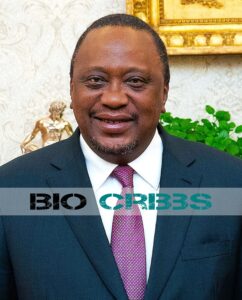
| Profile | Information |
| Uhuru Kenyatta career | 4th President of Kenya (2013–2022); Deputy Prime Minister (2008–2013); Minister of Finance; African Peace Envoy; Politician. |
| Uhuru Kenyatta real name | Uhuru Muigai Kenyatta |
| Uhuru Kenyatta age | 64 (as of October 31, 2025) |
| Uhuru Kenyatta date of birth | October 26, 1961 |
| Uhuru Kenyatta net worth | Estimated at $500 million (widely associated with the larger Kenyatta family holdings in land, banking, and business) |
| Uhuru Kenyatta wife / spouse | Margaret Gakuo Kenyatta (m. 1991) |
| Uhuru Kenyatta children | 3 (Jomo Kenyatta, Ngina Kenyatta, Jaba Kenyatta) |
| Uhuru Kenyatta parents | Father: Jomo Kenyatta (Kenya’s founding President); Mother: Ngina Kenyatta (Mama Ngina) |
| Uhuru Kenyatta religion | Roman Catholicism (Catholicism) |
| Uhuru Kenyatta state of origin | Nairobi, Kenya (Raised in a Kikuyu family from Kiambu County) |
| Uhuru Kenyatta alma mater | Amherst College, USA |
| Uhuru Kenyatta education | Bachelor of Arts (BA) in Political Science and Economics; St. Mary’s School, Nairobi (secondary). |
| Uhuru Kenyatta nationality | Kenyan |
Leave a Reply