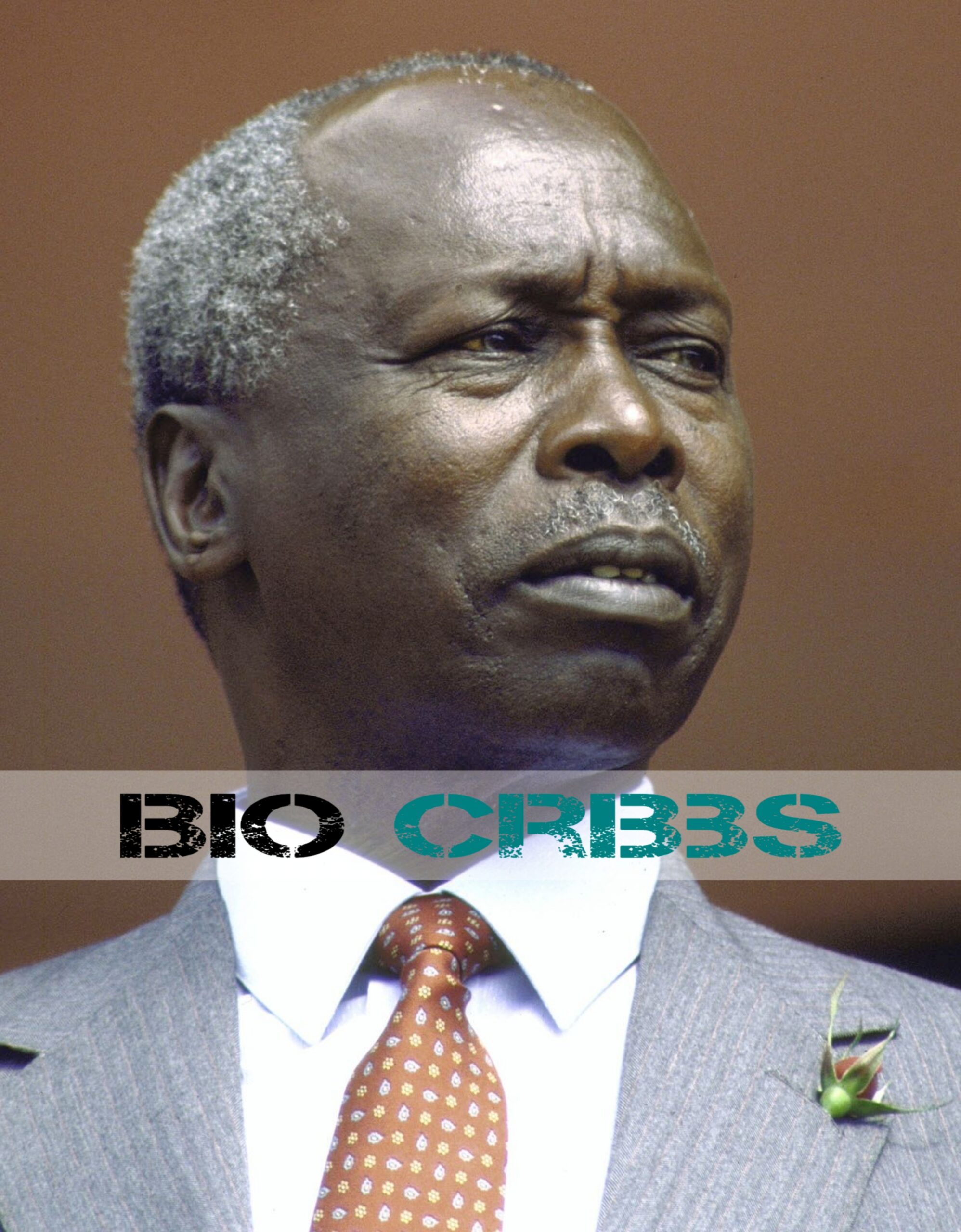
Daniel Toroitich Arap Moi was born on September 2, 1924, in Kuriengwo village, Baringo County, Kenya. He belonged to the Tugen sub-group of the Kalenjin community. He grew up in a humble family and lost his father at a young age. Despite challenges, Moi pursued education with determination.
Also Read: Edwin Sifuna Biography: The Complete Account, Verified Records & Legacy
He began school at African Inland Mission School in Kabartonjo. Later, he joined Tambach Teachers Training College. After graduating, he worked as a teacher and eventually became a school principal. His early career shaped his interest in leadership and public service.
In 1955, Moi entered politics when he was elected to the Legislative Council. He helped form the Kenya African Democratic Union (KADU), which aimed to protect minority interests. Later, he joined the Kenya African National Union (KANU) after KADU merged with it.
Moi became Vice President in 1967 under President Jomo Kenyatta. When Kenyatta died in 1978, Moi took over as President. He led Kenya for 24 years, making him the country’s longest-serving leader. His presidency lasted from 1978 to 2002.
During his time in office, Moi promoted education and built many schools. He also improved infrastructure and maintained peace in the country. However, his rule faced criticism for limiting political freedom and centralizing power. In 1991, Kenya returned to multi-party democracy under pressure from citizens and international groups.
Moi won the 1992 and 1997 elections but stepped down in 2002. He handed over power to Mwai Kibaki after a peaceful transition. After retirement, Moi stayed active in public life and supported community projects.
He was married to Lena Moi, and they had several children, including Gideon Moi, who is also a politician. Moi was known for his strong Christian faith and simple lifestyle.
Daniel Arap Moi died on February 4, 2020, at the age of 95. He was honored with a state funeral attended by leaders from across Africa. His legacy remains a mix of development, stability, and political debate. He is remembered as a key figure in Kenya’s history.
Daniel Arap Moi Early Life and Background
Daniel Toroitich arap Moi was born on September 2, 1924, in the village of Kuriengwo, Sacho location, Baringo County, in what was then the Kenya Colony. His upbringing was modest and marked by early hardship. Moi’s father, Kimoi arap Chebii, passed away in 1928 when Daniel was only four years old, leaving him to be raised primarily by his paternal uncle, Kimoi Chebii. The family belonged to the Tugen sub-group of the Kalenjin ethnic community, a minority group in Kenya. This background later played a complex role in his political identity and alliances. His uncle, recognizing the value of formal education, steered him toward a mission school rather than the traditional life of a Tugen herdsman. This decision was pivotal in shaping Moi’s early adherence to Christian faith and his lifelong emphasis on discipline and order. His childhood environment was a stark contrast to the power he would later wield, a factor that initially contributed to his popular image as a humble and relatable leader, particularly when compared to the highly educated elite of the coastal and central regions.
Daniel Arap Moi Education
Daniel Arap Moi’s educational path was foundational to his later career as a public servant and politician. He began his schooling at the African Inland Mission School in Kabartonjo in 1934, where he was also baptized Daniel. He later attended the Government African School in Kapsabet. The mission school environment instilled in him a deep and fervent Christian faith, which became a defining characteristic of his public life and leadership style. After his early schooling, Moi pursued teacher training at Tambach Teachers Training College in Keiyo District. This career as a teacher and later head teacher solidified his reputation among colonial officials for hard work, sobriety, and reliability. He served in the teaching profession from 1946 until 1955. His years as an educator cemented his belief in the importance of discipline, Nyayo philosophy (which means footsteps, claiming to follow Jomo Kenyatta), and order—principles that would later be enforced across the nation during his 24-year presidency.
Daniel Arap Moi Political Rise
Moi’s political rise began in 1955 when he was elected as a Member of the Legislative Council for the Rift Valley. As Kenya moved toward independence, he was instrumental in the formation of the Kenya African Democratic Union (KADU) in 1960, alongside Ronald Ngala. KADU was established to defend the interests of Kenya’s smaller, minority tribes, such as his own Kalenjin community, against the perceived dominance of the larger Luo and Kikuyu tribes led by Jomo Kenyatta’s Kenya African National Union (KANU). Following independence in 1963, Moi was convinced by Kenyatta to dissolve KADU and shift to KANU in 1964, a strategic move aimed at completing the decolonization process and fostering national unity. This move secured the support of the Rift Valley’s communities for the central government. Kenyatta first appointed Moi as Minister for Home Affairs in 1964 and later promoted him to Vice President in 1967. Despite strong opposition from the Kikuyu elite, Kenyatta shrewdly safeguarded Moi’s position for eleven years, ensuring that when Kenyatta died in 1978, Moi automatically assumed the presidency.
Daniel Arap Moi Presidency (1978–2002)
Moi’s Presidency (1978–2002) was the longest in Kenya’s political history, spanning 24 turbulent years. He initially promised to follow Kenyatta’s Nyayo (footsteps) philosophy, emphasizing “love, peace, and unity.” However, his governance quickly took a turn toward consolidation of power. A crucial moment came with the 1982 coup attempt by low-ranking Air Force personnel, which was swiftly suppressed by forces loyal to Moi. He seized this event as an opportunity to purge political opponents and further centralize power, amending the constitution to formally make KANU the sole legally permitted party in Kenya, effectively instituting one-party rule. Regionally, Moi was a significant Kenyan leader, notably serving as Chairmanship of the Organization of African Unity (OAU) from 1981 to 1983, raising Kenya’s diplomatic profile during the Cold War. Facing intense domestic and international pressure following the Cold War’s end, Moi was reluctantly forced to allow a transition from one-party rule to multi-party democracy in 1991. He subsequently won the highly disputed 1992 elections and 1997 elections, retaining power until his final term ended in 2002.
Daniel Arap Moi Leadership Style and Controversies
Moi’s Leadership Style was highly personalized and increasingly authoritarian over his two decades in power. He centralized decision-making, often circumventing established institutional procedures. His government was accused of widespread political repression, including arbitrary detentions, torture of dissidents, and stifling freedom of speech and association. The 1982 coup was followed by a purge that solidified his control, reducing the influence of opposition figures. The transition to multi-party democracy in 1991 did not immediately end these practices, as the 1992 elections were marred by state-sponsored ethnic violence designed to displace opposition supporters. Furthermore, his regime was plagued by massive allegations of corruption, with post-presidency inquiries linking Moi and his associates to significant financial scandals, most notably the Goldenberg scandal. His complex Relationship with opposition leaders like Raila Odinga and Mwai Kibaki was characterized by suspicion, detention of opponents, and later, strategic alliances, showcasing the ruthless pragmatism of his political survival.
Daniel Arap Moi Achievements and Legacy
Moi’s Achievements and Legacy present a mixed record, balancing national stability against profound democratic challenges. On the positive side, his administration oversaw the vast Expansion of education and infrastructure. He prioritized education by building numerous schools and colleges, increasing access for many previously marginalized communities. He also focused on rural development, implementing projects for water supply and agricultural support. Crucially, Moi maintained Stability during turbulent regional times; Kenya remained relatively peaceful despite civil wars and conflicts raging in neighboring countries. Internationally, he actively engaged in regional peace initiatives and diplomatic efforts. However, his mixed legacy is defined by the darker aspects of his rule: the authoritarian nature of the one-party state, allegations of corruption, and human rights abuses before 1992. His leadership centralized power and reinforced the role of ethnic patronage in Kenyan politics, laying the groundwork for many of the democratic and economic challenges that followed his retirement.
Also Read: Uhuru Kenyatta Biography: The Complete Account, Verified Records & Legacy
Daniel Arap Moi Personal Life
Daniel Arap Moi’s Personal Life was marked by his marriage to Lena Moi (née Helena Tungo Bomett). They married in 1950 and had eight children together, seven biological and one adopted daughter, including sons Gideon Moi (who became a prominent politician and senator) and Jonathan Toroitich, and daughter Jennifer Chemutai. Moi and Lena separated in 1974, four years before he became president, though they were never formally divorced. Lena largely withdrew from the public eye during his 24-year presidency but is still recognized as Kenya’s Second First Lady. Moi was known for his simplicity, lack of public extravagance (despite the corruption allegations against his regime), and his devout Christian faith. A lifelong member of the Africa Inland Mission Church, his strong religious beliefs often influenced his public rhetoric and his political focus on moral education.
Daniel Arap Moi Retirement and Death
Daniel Arap Moi was constitutionally barred from running in the 2002 presidential election, leading to his Retirement in 2002 after handing over power to Mwai Kibaki, who won the election against Moi’s chosen successor, Uhuru Kenyatta. This peaceful transition of power, ending a 24-year rule, was a significant moment for multi-party democracy in Kenya. After leaving office, Moi largely retreated from active Kenyan politics but remained influential as an elder statesman and de facto patron of his Kalenjin community. He passed away on February 4, 2020, at the age of 95, after a period of ill health. The nation observed an extended period of national mourning, and he was accorded a full state funeral with military honors, reflecting his stature as the longest-serving president in Kenya’s history.
Daniel Arap Moi Impact on Kenya and Africa
Daniel Arap Moi’s Impact on Kenya and Africa remains a central point of historical debate. He dominated Kenya’s political culture for nearly a quarter-century, leaving an indelible mark. Domestically, his rule entrenched political patronage, making loyalty a key currency and strengthening the central executive at the expense of democratic institutions—a characteristic of post-colonial African leadership. His OAU chairmanship and diplomatic engagement raised Kenya’s regional profile. His emphasis on stability and national unity, often enforced through authoritarian means, is credited with preventing Kenya from collapsing into civil strife, unlike some of its neighbors. Conversely, his regime’s transition to multi-party democracy was reluctantly accepted under pressure, and the subsequent 1992 elections were widely viewed as flawed. His mixed legacy is thus one of a master political survivor who provided a necessary, if sometimes brutal, centralized structure, yet profoundly hindered the development of mature democratic institutions and a culture of accountability in Kenya.
Daniel Arap Moi Age (The Verified Birth Year and Lifetime)
Daniel Arap Moi Age was 95 years old at the time of his death. He was born on September 2, 1924.
Daniel Arap Moi Children (Family Tree and Offspring)
Daniel Arap Moi had eight children.
Among them, Gideon Moi is the most publicly known. He is a Kenyan politician and former senator for Baringo County. The other children have mostly stayed out of the public spotlight. Moi raised his family with his late wife, Lena Moi, and maintained a strong emphasis on discipline and education.
Daniel Arap Moi Wife (Lena Bomett and Marital Status)
Daniel Arap Moi was married to Lena Moi.
Lena Moi was a quiet and reserved woman who stayed out of the public eye. She supported her husband during his early political career but later lived separately from him. Despite their distance, she remained respected as Kenya’s former First Lady. Lena and Daniel had several children together, including Gideon Moi. Lena Moi passed away in 2004.
Daniel Arap Moi Net Worth (Estimated Wealth and Financial Legacy)
Daniel Arap Moi’s estimated net worth was over $3 billion at the time of his death.
His wealth came from decades of political influence, land ownership, business interests, and investments. Moi was linked to various properties across Kenya, including large tracts of land, real estate, and shares in major companies. Though exact figures were never publicly confirmed, reports often placed him among the wealthiest individuals in Kenya. His family continues to manage several of these assets.
Daniel Arap Moi Tribe (Kalenjin Sub-Group and Regional Origin)
Daniel Arap Moi belonged to the Tugen sub-tribe of the Kalenjin community.
Also Read: Samia Suluhu Hassan Biography: The Complete Account, Verified Records & Legacy
The Kalenjin are one of Kenya’s major ethnic groups, mainly found in the Rift Valley region. Moi was born in Baringo County, which is home to many Tugen people. His tribal background played a role in shaping his early life and political support base.
Daniel Arap Moi Profile Table (Quick Facts and Data Overview)
| Profile | Information |
| Daniel Arap Moi career | 2nd President of Kenya (1978–2002); Vice President (1967–1978); Minister of Home Affairs; Teacher (1946–1955). |
| Daniel Arap Moi real name | Daniel Toroitich Arap Moi (Born Toroitich Arap Moi) |
| Daniel Arap Moi age | 95 (Died February 4, 2020) |
| Daniel Arap Moi date of birth | September 2, 1924 |
| Daniel Arap Moi net worth | Not known (Estimated at over $3 billion / Sh300 billion at time of death, based on court documents and media reports, but disputed and associated with family trusts). |
| Daniel Arap Moi wife / spouse | Lena Moi (m. 1950, separated 1974, died 2004) |
| Daniel Arap Moi children | 8 (Seven biological, one adopted: including Gideon Moi, Jonathan, Jennifer, Raymond, Philip, Doris, John Mark, and June) |
| Daniel Arap Moi parents | Father: Kimoi arap Chebii; Mother: Kabon (name not widely public, was raised by his uncle after father’s death) |
| Daniel Arap Moi religion | Christianity (Lifelong member of the African Inland Mission Church) |
| Daniel Arap Moi state of origin | Baringo County, Kenya (Born in Kuriengwo, Sacho) |
| Daniel Arap Moi alma mater | Tambach Teachers Training College |
| Daniel Arap Moi education | Teacher training from Tambach Teachers Training College; Educated at African Inland Mission schools. |
| Daniel Arap Moi nationality | Kenyan |
Leave a Reply